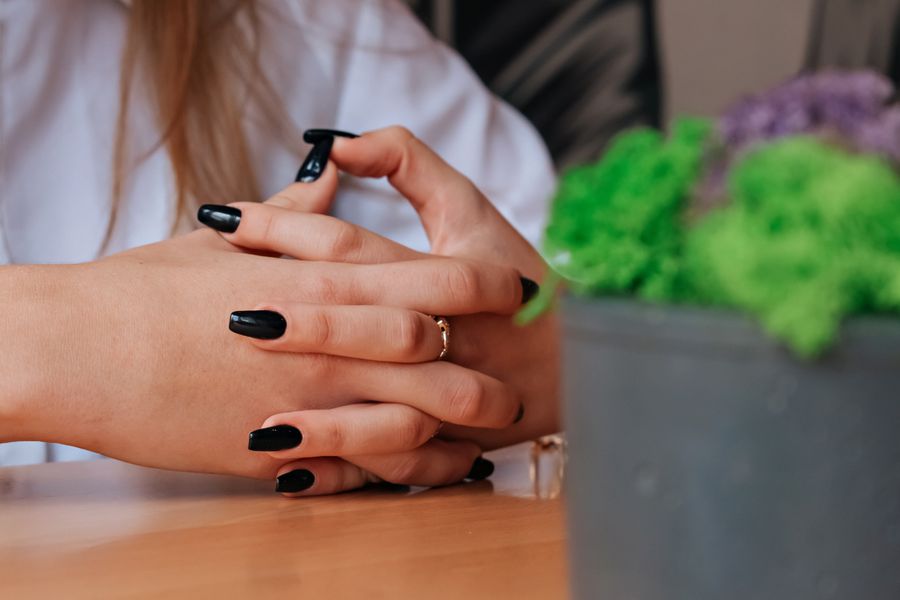
Workplace expectations vary widely, meaning office nail suitability is better framed around company dress codes, daily manual tasks, and personal comfort rather than a universal rule declaring specific colors unprofessional. Rather than defaulting to rigid restrictions, finding the right manicure involves balancing a polished aesthetic with practical keyboard demands. By assessing workplace norms and daily routines, you can choose styles ranging from discreet sheer neutrals to expressive creative accents.
Understand Your Workplace Policy
Workplace norms differ by industry. Corporate legal or clinical settings often favor understated aesthetics, while design studios or tech offices encourage personal expression.
Styling guides like The Fern Edit emphasize that office culture dictates whether a manicure should be subtle or bold. Before booking an appointment, review employee handbooks or observe client-facing colleagues to establish a practical baseline for acceptable styling boundaries.
Account for Keyboard and Manual Tasks
Daily workload directly influences nail length and structure. Continuous typing, data entry, or handling materials make overly long or sharp nails prone to typing fatigue, noisy key contact, and edge chipping.
Salon analyses from Iconix Nail Bar note that work-appropriate manicures frequently favor manageable lengths—such as short rounded, oval, or squoval shapes. A squoval shape blends a square top with rounded corners, distributing pressure evenly. Keeping the free edge near the fingertip prevents peeling and lets you type comfortably with finger pads.
From Discreet to Expressive Options
Office manicures exist on a spectrum, allowing you to choose the visibility level that matches your environment:
- Discreet Sheers and Neutrals: Translucent milky whites, sheer nude pinks, and glazed finishes provide a clean, groomed appearance. These tones blend with the natural nail bed, making regrowth and minor tip wear barely noticeable during a busy work week.
- Classic Micro Accents: Instead of bold nail art, micro French tips or fine negative-space lines introduce subtle design interest. A razor-thin white, metallic, or pastel tip elevates a neutral base while remaining modest for conservative meetings.
- Muted and Seasonal Cremes: Soft taupes, dusty mauves, warm creams, and muted clay tones provide rich color saturation without high visual contrast. In environments that welcome color, deep forest greens or rich wine tones offer a sophisticated finish.
- Expressive Modern Accents: In casual or creative workplaces, minimalist geometric dots, tonal ombre gradients, or velvet shimmer give manicures personality while retaining a tidy silhouette.
Your workplace and your own preferences are the best guides. A sheer neutral can feel understated, while a brighter color may suit a more relaxed setting. Check any written appearance policy if your workplace has one.
Maintenance and Personal Preference
A manicure that looks pristine on Monday can look unkempt later if the formula requires frequent upkeep. Dark, highly pigmented lacquers contrast sharply with the nail bed and accidental chips, requiring prompt touch-ups. If you have limited time for salon visits or home maintenance, sheer bases and neutral tones are more forgiving.
Your personal preference also matters. If you feel most confident with expressive designs, you do not need to abandon color entirely. Keeping the nail length short and the cuticle work meticulous helps any shade look neat and intentional.
Concept Previews vs. Salon Feasibility
Digital visualization tools can help you test ideas before sitting in the salon chair. You can explore creative concepts on NailMoodLab, evaluate whether an oval, square, or squoval shape complements your hands with hand-shape analysis, or test specific shades using virtual try-on.
Keep in mind that digital mockups are concept renders, not guaranteed salon outcomes. A digital image cannot reflect how your natural nail thickness, undertones, or office lighting will affect the final result. Always discuss feasibility with your nail technician before application.
Common Mistakes and Practical Trade-offs
- Prioritizing Length Over Function: Selecting long extensions when your role demands heavy typing creates typing errors and strains the natural nail.
- Ignoring Chipping Visibility: Choosing high-contrast dark gels without an upkeep plan, resulting in prominent chips during client interactions.
- Overlooking Fluorescent Lighting: Forgetting that harsh overhead office bulbs make cool-toned chalky whites look washed out, whereas warmer neutrals remain flattering.
- Vague Salon Descriptions: Asking for "something simple" without clarifying your preferred opacity, length, or finish.
Decision Checklist and Salon Request
Before booking your manicure, confirm these four choices:
- Policy: Does your company enforce strict grooming guidelines or allow personal expression?
- Ergonomics: Will your chosen length allow comfortable keyboard typing?
- Upkeep: Are you prepared to maintain a high-contrast shade, or do you need a low-maintenance sheer?
- Shape: Does your chosen shape support your daily physical tasks?
Example Salon Request:
"I would like a clean, short gel manicure shaped in a soft squoval that stays flush with my fingertips for comfortable typing. Please apply a sheer nude base with a very thin micro French tip along the edge, and ensure the top coat is cured with a smooth, glossy finish."