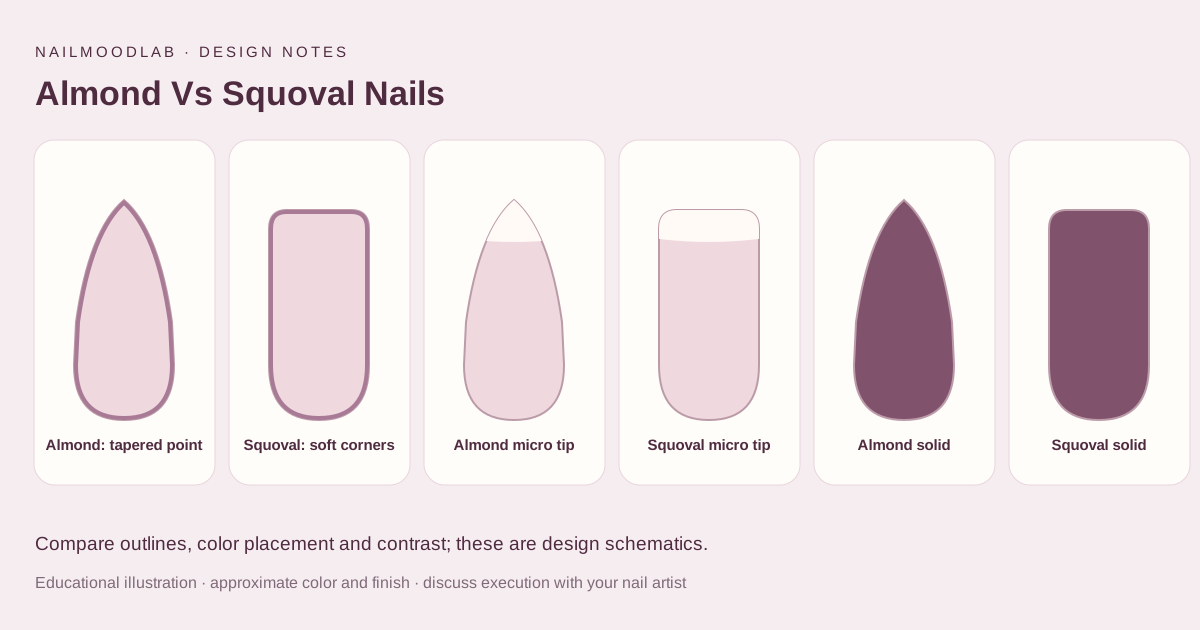
Almond nails narrow toward a rounded point. Squoval nails retain a square-like end with softened corners. The choice is between a tapered silhouette and a softer square outline; it is not simply between long and short nails.
OPI's shape explanations distinguish almond and squoval. Use the names to begin a conversation, then show the outline and length you want. The shape label does not tell a technician which physical service is appropriate for your nails.
Compare the silhouette, not just the color
| Visible detail | Almond | Squoval |
|---|---|---|
| Sides approaching the tip | Narrow inward | Stay closer to a square outline |
| End | Rounded point | Flatter end with softened corners |
| Main feature to specify | How much taper and how pointed the end looks | How much corner rounding you want |
| A useful reference | A front view that shows both side angles | A front view that shows the end and both corners |
| What the name does not establish | Feasible length, material or physical suitability | Feasible length, material or physical suitability |
If you mainly want a rounded end without an almond point, read almond versus oval nails. If your main question is corner softness within a square outline, read square versus squoval nails.
Avoid comparing short natural squoval with long almond extensions
That comparison changes length and service as well as shape. You might prefer the longer appearance, the smoother background color or the artwork rather than the almond taper.
A public almond-and-squoval preference discussion illustrates this problem: the examples involve different lengths and services. The opinions are useful prompts to compare your own priorities, but they do not demonstrate a universally better shape.
Try to compare the same hand view, similar visible length and the same quiet color. First choose between the outlines. Then introduce artwork. If you cannot find matched examples, name the other differences so you do not mistake them for the effect of shape alone.
What if you want to keep your nails very short?
Ask the technician which outlines are achievable at your current length. A distinct almond taper may require an adaptation you do not want, while a reference labeled short almond may be longer than your intended manicure.
Describe the amount of visible tip you are comfortable wearing and show that length. Avoid treating an AI picture as proof that your natural nail can be reshaped to match it. The image can communicate a preference; the artist must assess the physical starting point and service.
You can also choose a softly rounded or oval-looking outline if that better matches your length goal. Choosing another silhouette is a design decision, not a failure to achieve a fashionable label.
Four design comparisons that reveal different preferences
A solid pale color
Keep the color identical and compare the outer border. Almond emphasizes the transition into its rounded point; squoval keeps a broader-looking end. Look at the center and both sides rather than relying on one tilted photograph.
Micro French tips
Use a narrow border on both shapes. The tip line follows a tapered curve on almond and a softer square end on squoval. If one reference has a much deeper colored border, reduce that difference before deciding which silhouette you prefer.
One tiny accent motif
Place a small dot, heart or flower toward the center of a single nail. Compare the space around it. On a very short canvas, a simpler motif may communicate your idea more clearly than shrinking several detailed elements into the same area.
A side curve or diagonal detail
A curved line can follow the almond taper or contrast with the flatter squoval end. Specify where it begins and ends. If the line stops near the tip, check that the intended negative space remains visible after the design is adapted to your length.
These are layout proposals, not claims that any finish requires a particular shape. You can bring the same idea to an artist and discuss its adaptation.
Use daily tasks to define constraints
If typing, glove use or another task limits your preferred length, start there. Ask yourself which actual manicure lengths you have already worn comfortably. A familiar squoval set may feel easier to imagine than an unfamiliar almond concept, but familiarity does not prove an objective ranking.
Our nail shape guide for typing helps describe routine constraints. Keep those separate from appearance preferences: “I want a tapered look” and “I need to keep this visible length” are both useful pieces of information for the artist.
Avoid assuming that a shape name guarantees comfort, strength or fewer snags. Those are physical outcomes that a picture cannot establish.
A clear selection process
- Set your length constraint before comparing shapes.
- Choose matched-length references where possible.
- Compare the tip: rounded point or softened square end.
- Compare how much side taper or corner rounding you want.
- Add the color and artwork only after the outline is clear.
- Ask the technician to assess feasibility and agree on an adaptation if needed.
For almond: “I like this gentle taper and rounded point, but I want to keep the visible length close to this shorter example. Can you assess which service or outline is feasible?”
For squoval: “I want a square-like end with softened corners, at this length. Please keep the sides mostly square rather than narrowing them into an almond point.”
Use NailMoodLab's shape analysis tool to explore visual directions from a hand photo. Its suggestions do not measure fit, confirm structure or replace the artist's assessment.
Questions readers ask
Is squoval the same as oval?
No. Squoval retains a square-like end with softened corners, while an oval outline has a more continuously rounded end. Show a reference if the label is being used loosely.
Can I switch from almond to squoval?
Ask the artist about your current set, intended length and appointment. A visual comparison cannot tell you what can be changed without assessing the existing nails or enhancement.
Which shape suits wide nail beds?
There is no universal aesthetic rule. Compare your preferred outline at your intended length, and ask the technician what is feasible. Do not use a concept image as a physical-fit verdict.