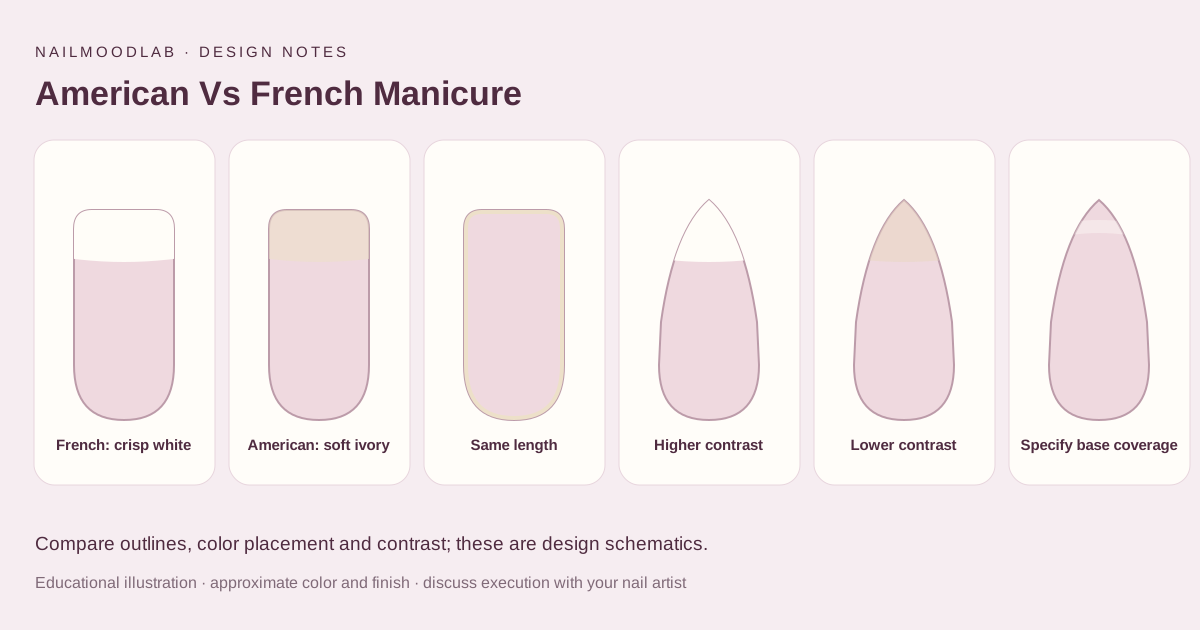
A classic French manicure usually pairs a defined white tip with a pink, beige or clear-looking base. An American manicure is often interpreted as a softer version: an off-white or ivory edge with less contrast against the base. The useful difference is what you see at the border, rather than a fixed rule about nail shape or application order.
J.Aesthetic's service explanation makes that color-and-contrast distinction. Salon names vary, so a reference showing the edge you want is more precise than either name by itself.
Compare four visible details
| Detail | Classic French direction | American direction |
|---|---|---|
| Tip color | A clearly white edge | Often ivory, cream or softer white |
| Contrast | A distinct border against the base | A quieter difference between base and tip |
| Edge | Usually an identifiable smile line | May be softened; specify how much |
| Base | Can be sheer or more covered | Can also vary; softness does not specify coverage |
| Shape | A separate choice | A separate choice |
| Material | Ask the salon which service is used | Ask the salon which service is used |
Neither name tells you the exact product, how long it will wear, or what it will cost. Keep those service questions separate from the visual comparison.
Tip color and edge softness are separate choices
An ivory tip can still have a crisp edge. A white tip can be softened by the overall design. If you ask for “soft French” without showing a reference, the artist may reasonably interpret softness differently from you.
Compare two things: how white the edge appears, and how clearly its boundary can be seen. For example, “ivory with a visible curve” is a different request from “a pale tip that almost merges into the base.” Both may be called American by different salons.
Our illustration shows those broad appearance directions. It does not represent actual polish swatches or a mandatory salon technique.
Three useful design comparisons
Short squoval: crisp white versus soft ivory
Keep the outline and visible length the same, then compare a narrow white tip against a narrow ivory tip. Leave the base unchanged. This helps you decide whether you prefer the color contrast without introducing a different shape into the comparison.
On a small canvas, ask the artist to adapt the border rather than copying the width from a long-nail photo. The French tips for short nails guide gives more detail on working within that space.
Medium almond: distinct curve versus quiet edge
Use the same tapered outline in both references. In one, the tip forms a clearly defined curve; in the other, the edge is less prominent against the background. Identify whether the thing you prefer is the curve, the off-white color, or the base coverage.
If you like the softer example but still want a visible smile line, say so. That avoids unintentionally requesting a full gradient.
A pale base: translucent versus covered
Compare how much of the natural nail remains visible under a translucent base with a more covered pale base. This can change your perception of the tip even if the tip itself is identical.
The Bubble Bath guide explains how a named pink shade and a general sheer-pink appearance are different requests. It is useful when your reference uses a pale base but does not identify the exact product.
American manicure is not automatically ombré
Ombré describes a gradual transition between colors rather than a single clearly defined border. A softer French-style edge may resemble a gradient in a photo, but the label American does not always mean a full fade.
Ask: “Do I want a visible curve in an off-white color, or do I want the tip to fade into the base?” If you choose the second, use our ombré guide to explain where the transition should begin and how much of the tip should remain light.
A decision process that avoids changing several things at once
- Choose the shape and length first, or hold them constant while comparing references.
- Compare bright white with ivory or cream.
- Compare a sharp boundary with a softened boundary.
- Decide how translucent the base should be.
- Show the final combination to the artist and ask which service reproduces it.
Do not feel obliged to choose an entire named style. You may want the crisp line of one reference and the warmer tip of another. The French tip design guide helps separate those choices.
What to say at the salon
For a softer direction: “I want short squoval nails with a translucent pale-pink base and a narrow ivory tip. Keep the edge visible, but the contrast gentle. This reference shows the softness I mean.”
For a crisper direction: “I want the same length with a clearly white tip and a defined curve. Please keep the tip narrow rather than using the deeper border in this second photo.”
Ask about the products and appointment price after agreeing on the appearance. A manicure name does not establish a material or maintenance plan. If you have a workplace or event requirement, check the actual requirement yourself; this color comparison cannot establish compliance.
You can use NailMoodLab's virtual try-on to compare visual concepts. It cannot reproduce an exact polish color or tell you which service will physically suit your nails.
Common sources of confusion
- Treating ivory as a universal nude. Compare the actual color and your own preference; a shade label cannot decide that for you.
- Changing shape while comparing contrast. A longer almond example and a short square example introduce another variable.
- Assuming softer means longer wear. The design description does not establish durability.
- Leaving the base unstated. A translucent base and a covered milky base are different backgrounds.
Questions readers ask
Can a French manicure have off-white tips?
You can request that combination. Names are useful starting points, but the reference and description should settle the actual appearance.
Which looks more natural?
If you mean less contrast, compare a softer tip and a quieter border. If you mean more of your nail showing through, specify translucent base coverage. Those are separate preferences.
Which is better for short nails?
Either direction can be discussed at a short length. Start with the available space and the amount of tip you want, then ask the artist to assess the proposed service.