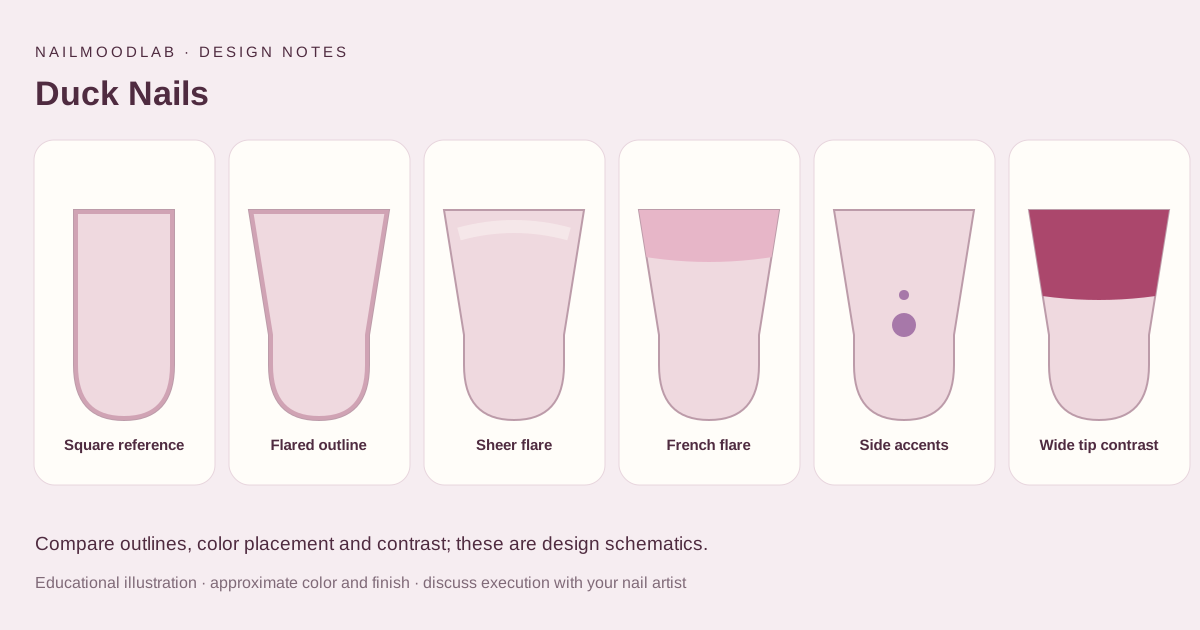
Duck nails are recognizable by their flared outline: the tip spreads outward rather than staying parallel or narrowing inward. They are also described as flared nails. The important design choices are how much flare you want, how long the outline should be, and how artwork uses the wider-looking end.
A very wide, heavily decorated reference and a shorter, quieter flared set are different requests. Decide which part you like before asking for “duck nails.” The name alone does not identify an exact tip, material or service.
Duck versus square: compare the side angle
| Outline | What the sides do toward the tip | What to say |
|---|---|---|
| Square | Stay closer to parallel | “A flat end with mostly parallel sides” |
| Duck or flared | Spread outward toward a wider end | “An intentional outward flare” |
| Coffin | Narrow inward toward a flat end | “A tapered outline with a flat tip” |
Look at both sides, not just the flat end. A square-looking tip in a tilted photo can be difficult to judge, so choose a view where the whole outline is visible. Our square versus squoval guide addresses corner softness within a square outline; that is a separate question from outward flare.
The diagram is a simplified outline comparison. It cannot assess the structure of an enhancement or recommend a physical service for your nails.
Pick the amount of flare and length separately
Start by choosing a visible outline: a small outward change or a more pronounced spread. Then choose length. A longer picture may make its flare more obvious, but that does not mean you need to request that length.
Use two references if necessary: one for the flare and one for the length you intend to wear. Ask the technician whether that combination is feasible and what adaptation is needed. Do not assume a pre-made tip or an existing set can be changed simply because a concept image shows the outline.
Our nail length guide helps communicate the length in a reference. Product labels such as short or medium can vary across makers.
Six duck-nail design directions
1. A sheer base that shows the outline
Keep the surface quiet if the flare itself is the main feature. Specify translucent pink or another base direction and leave extra motifs off the set. A clear outline reference is more useful than a close crop that shows only the color.
2. A French tip following the flare
Ask for a colored border that follows the outward-spreading end. Decide how deep that border should be and how much base should remain visible. On a shorter reference, discuss a smaller colored area rather than copying a deep border from a long set.
3. Color concentrated at the wider end
Use the tip area as the main color block and keep the lower portion quieter. Compare a straight border with a curved border before adding more art. The flare and color block can already provide two clear visual features.
4. Small side accents
Place a dot or tiny motif near each side of an accent nail, leaving open space between them. Show whether the details sit near the tip or farther toward the center. If the actual canvas is smaller than the reference, simplify the motif rather than crowding the edge.
5. A graphic contrast line
Use one line or curve to emphasize the silhouette without filling the whole surface. Keep the line color repeated elsewhere in the manicure. Specify where it stops, since a line disappearing into a similarly colored tip may not communicate the intended design.
6. One statement accent with a quiet set
If you like a detailed or raised accent, confine the idea to named fingers and keep the rest simpler. Ask the technician about the actual products, placement and service needed. A wider-looking surface in a picture does not establish that heavy embellishments are structurally appropriate.
These are proposed layouts. A duck-nail inspiration collection can supply further visual references, but a gallery image does not establish fit or how its set was made.
Consider routine through your own constraints
Think about the visible length and width you are willing to wear while typing, using gloves or carrying out other tasks. Compare those constraints with real sets you have worn, and tell the artist what matters to you.
Avoid relying on strangers' preferences as a suitability test. Public duck-nail discussions include different aesthetic reactions. Those opinions neither prove universal practicality nor make the shape unsuitable for everyone.
If you want to change an existing set, ask the artist to assess it. A square-to-duck question illustrates that consultation need; it does not establish a procedure for making the change.
Build an appointment reference
- Select the amount of outward flare you like.
- Set the visible length using a comparable reference.
- Choose the base and tip coverage.
- Mark where any accent sits and which fingers carry it.
- Ask the technician to assess the outline, service and complete quote.
For example: “I like the outward flare in this reference, but I want the shorter length shown here. I would like a sheer pink base and a narrow colored tip, with no raised details. Can you assess whether that outline is feasible and show the adaptation you would make?”
Our nail design consultation guide helps separate essential details from optional decoration.
If you use NailMoodLab for a visual concept, inspect whether the image actually preserves the outward flare. AI may alter the silhouette. It cannot confirm physical fit, construction or wear.
Questions readers ask
Are duck nails just wide square nails?
The defining design feature is the outward flare toward the tip. A broad square outline can still have parallel sides, so compare the side angles rather than width alone.
Can I request a shorter duck outline?
Show the shorter reference and ask the technician what is feasible. Short is not a standardized measurement across products, and a drawing cannot establish the actual service.
Do duck nails need elaborate art?
No. The outline can be the main feature. You can choose a quiet color or narrow edge and discuss the physical service separately.