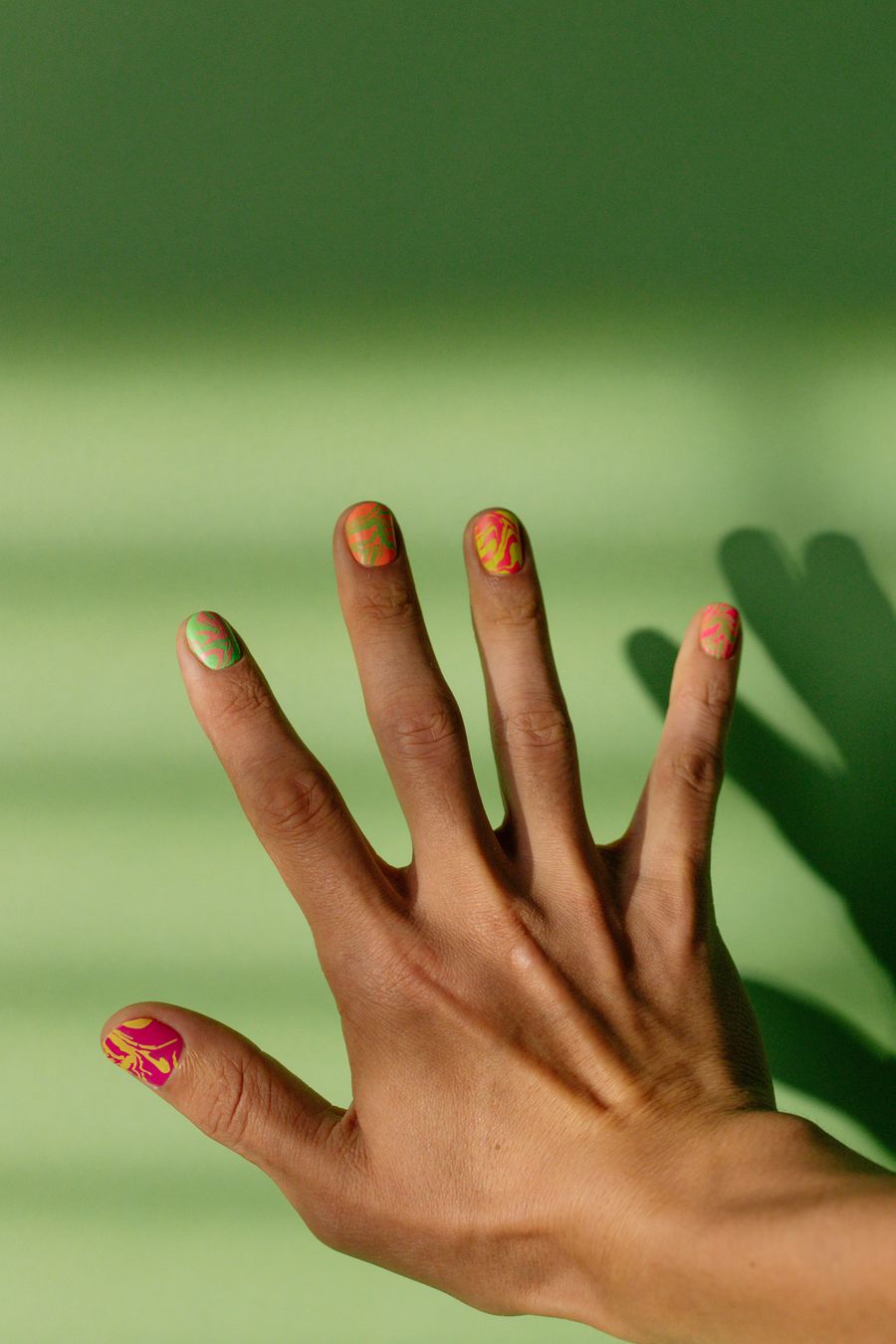
A matching manicure and pedicure can mean the same shade and finish, a shared color family, or one motif repeated in different ways. Choose which connection matters before selecting two complete designs. You do not need to duplicate every fingernail detail on your toes to make the pair feel intentional.
If you love detailed hand art but prefer a plain pedicure, use a color from the manicure as the link. If an exact match is the main attraction, confirm the available shade and finish for both services rather than assuming a reference guarantees them.
Choose what “matching” means for this appointment
An exact match offers one visual decision for both services. A coordinated pair gives each service more independence. Neither needs to be justified as the universally correct approach.
| Connection | Manicure example | Pedicure example | Main point to confirm |
|---|---|---|---|
| Exact shade and finish | Solid burgundy with a glossy appearance | The same intended burgundy and finish | Availability and actual samples for both services |
| Shared color family | Pale lavender with deeper purple detail | A plain deeper purple | Whether the shades create the relationship you want |
| One shared color | Blue-and-ivory hand art | Plain blue | Which color should connect the pair |
| Shared motif | Small flowers within a detailed set | A simplified flower accent, if offered | Placement and scale appropriate to the pedicure |
A request for “the same” can still leave details unresolved. Do you mean the same color, the same finish, or the same artwork? Write the connection in one sentence so it remains clear if different technicians handle the services.
Exact matching: confirm the appearance, not just the name
If you want the same shade on hands and feet, ask the salon what is available for the services you have selected. A similar name or a digital color swatch is not enough to settle an exact visual preference.
Compare the actual options together where possible. Check whether one looks more sheer, more opaque, or more reflective than you expected. If the precise match is unavailable, decide whether a close alternative is acceptable before the service starts.
You can keep the match simple with solid color. Adding artwork to one service does not automatically mean the other needs it. The shared shade can remain the link while the manicure has a separate decorative role.
If you specifically want identical art as well, ask what can be retained and what needs adaptation. “Same design” should not silently become “same color with a different motif” without your agreement.
Coordination: select a connecting feature and leave room for differences
A coordinated pair needs a defined relationship, not necessarily matching quantities of every color. A manicure might use mostly ivory with small blue details while the pedicure is solid blue. That carries the accent color across without reproducing the whole composition.
Alternatively, use related shades: a lighter pink on the hands and a deeper rose on the toes. Decide whether you want the relationship to be close-toned or noticeably contrasted, then compare available samples. Color-family labels alone can cover a wide range of appearances.
You may also prefer different colors with the same overall finish. If finish is the intended link, make that explicit instead of continuing to search for a shade match you do not actually want.
In a public discussion about matching nails and toes, responses included preferences for exact matching, coordination, and different colors. Those individual opinions do not establish a dress code. They are a reminder to define your own connection rather than assume everyone means the same thing by a matching set. Read the discussion.
A shared motif needs a separate pedicure layout
The detailed art in a manicure reference is not automatically a ready-made pedicure plan. Smaller toenails may not offer room for the same internal lines, repeated motifs, or accent arrangement. Ask which part of the idea can remain recognizable rather than simply asking for everything to be scaled down.
For a floral manicure, you might discuss a simplified flower on a suitable accent area and plain color elsewhere. For geometric hand art, a shared color block may be enough. The connection can be the motif's outline or palette rather than an exact replica.
Confirm whether the salon offers the proposed pedicure art and what changes it recommends. If the only acceptable interpretation to you is a detailed copy, say so early. You can then choose a different coordinated approach if that request is not available.
Also distinguish a painted motif from a raised embellishment in your reference. Ask the technician about placement, practical wear, and service options rather than assuming a hand-design image answers those questions for feet.
Budget for two services, not one visual concept
Plan the manicure and pedicure separately even when their designs are linked. Ask for the scope and quote for each, including any art, finish, removal, or other service elements relevant to your booking. Do not assume a matching color means matching inclusions or cost.
One community poster described liking a chrome manicure but reconsidering whether to repeat the additional expense for a pedicure. That is one person's experience, not a price guide, but it captures a useful planning question: which part of the look is worth repeating for you? Read the account.
If the combined plan exceeds your budget, keep the connecting feature and reduce optional work. Detailed hands plus a plain coordinated pedicure is one option. Another is solid matching color on both. Ask for the revised quote; do not assume a particular simplification produces a fixed saving.
Before booking, settle four points: the hand service, the foot service, the shared visual feature, and the total you are comfortable approving. Timing and maintenance can also be discussed separately with the salon rather than inferred from the match.
Worked example: detailed blue hands, plain blue toes
Imagine a client who wants an ivory manicure with blue floral accents and hopes to coordinate a pedicure within a separate spending limit. This is a hypothetical planning example.
Their essential link is blue, not repeated flowers. They could request the detailed manicure and a plain blue pedicure, comparing the available blue shades together. This preserves the color relationship while leaving the foot service visually simple.
The booking note could say: “Hands: ivory base with blue floral accents. Feet: plain blue coordinated to the manicure's flower color, with no added art. Please confirm the available shades and quote both services separately.” If the match is only approximate, the client can decide whether that is acceptable before proceeding.
Use a hand reference without inventing a foot preview
NailMoodLab can help you describe and explore the manicure side of the plan. For the example, specify the hand nail length, ivory base, blue floral accents, and preferred finish. The optional Things to avoid field can exclude unwanted glitter, extra colors, or raised decorations.
Before exploring several hand-design alternatives, sign in and review your account's AI allowance and current plan or billing options. Choose a useful concept to download, then attach a written pedicure note explaining the shared color and separate scope. You do not need a second imagined image to make that instruction clear.
The try-on page requires a clear hand photo and a design image. It previews hands, not feet or toes. It may alter details and cannot establish exact placement, fit, or salon feasibility; see the virtual try-on guide.
Take the hand reference and pedicure note to the salon together. Let real shade samples and a confirmed service plan complete the match.
If sparkle is the shared feature, compare glitter and shimmer and confirm the available finish for each service.