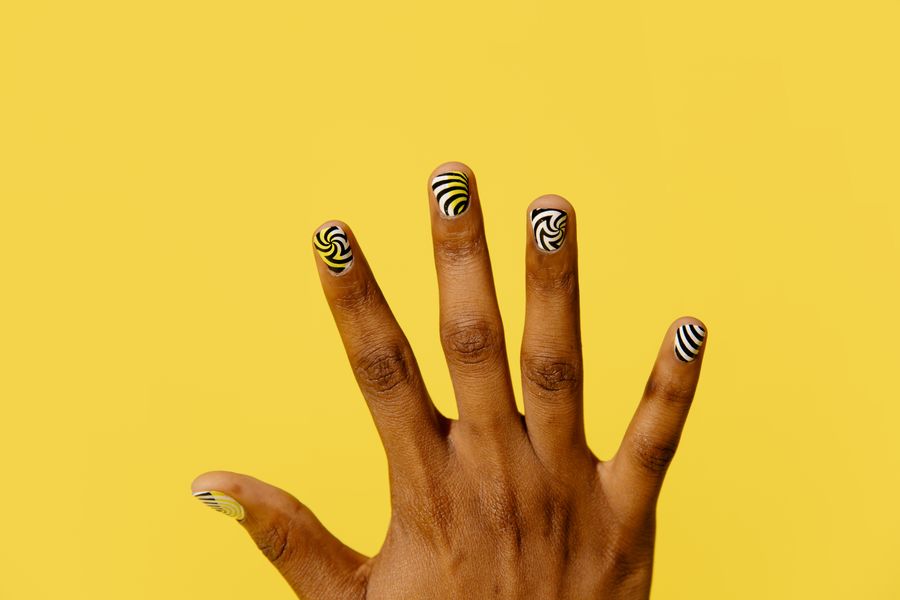
Short square nails offer a crisp, architectural silhouette that feels both modern and grounded. Unlike rounded or almond contours that taper toward a gentle apex, a square shape creates an uncompromising horizontal free edge. For anyone styling shorter lengths, choosing the right short square nail designs means learning how to work with this flat edge rather than fighting it.
Selecting a design based on your daily routine and natural nail plate is detailed in our foundational guide to short nail designs, where surface area dictates art placement. On a flat tip, the aesthetic challenge is clear: you want to complement the straight horizontal line across the top with artwork that flatters your nail-bed width, keeping your fingertips looking intentional, balanced, and streamlined.
Sharp Square vs. Soft Square: When to Ease the Corners
Before selecting colors or patterns, consider the corner geometry of your tip.
- True Square: Features defined corners and a straight free edge. It delivers high-contrast visual drama and clean lines.
- Soft Square: Maintains that flat horizontal free edge, but the extreme outer points are gently beveled or rounded off. (For a full anatomical comparison between shapes, refer to our square vs. squoval breakdown).
When Softened Corners Are Easier to Live With
While a razor-sharp square edge looks striking immediately after a fresh manicure, sharp corners demand extra care. On natural nails, sharp corners can catch on fabric or hair during everyday tasks.
If your daily routine involves heavy typing, tactile tasks, or hands-on work, softening the corners slightly may reduce snagging while preserving the straight, modern profile of a flat tip.
The "Flared" Tip Challenge (and How Art Placement Fixes It)
A frequent concern shared in online nail communities—such as discussions on Reddit's r/GelX_Nails regarding short square extensions—is that short square sets can occasionally look "flared" or fan-shaped.
Two visual factors can contribute:
- Bed Proportions: When the free edge is kept short on a wider nail bed, the width of the tip can visually overpower the length.
- Product Application: Bulky product near the sides or outward-angled filing can make a tip appear wider.
Community members discussing short square preferences often point out that keeping the visible side lines balanced can help avoid a flared look.
From an art perspective, the solution is verticality. Art that draws the gaze downward along the central axis of the finger creates an elongating effect that counteracts horizontal widening.
6 Short Square Nail Designs That Complement a Flat Edge
Curated roundups from fashion outlets such as InStyle and Byrdie demonstrate that a flat tip thrives when art honors its clean geometric boundaries:
1. The Micro-French (With Visible Free Edge)
Traditional deep smile lines designed for oval nails can clash with a flat tip. Instead, opt for a micro-French: an ultra-thin line that runs parallel to the straight edge. This design works best when you have at least a sliver of visible natural free edge. A crisp white, black, or metallic micro-band acts like a delicate frame, emphasizing the shape's geometric neatness without shortening the nail bed.
2. Single Dot Negative Space
Placing a single pinpoint dot just above the cuticle line or dead center creates an instant minimalist anchor. By concentrating the contrast in the center of the plate, the eye naturally reads the nail as longer and narrower. This understated look is explored further in our minimalist short nail design guide.
3. Vertical Pinstripes and Linear Accents
Square nails naturally welcome straight lines. A fine vertical stripe running down the center—applied with striping tape or a fine liner brush—breaks up the width of a short nail bed. Half-and-half split colorways also split the horizontal plane, providing a lengthening effect.
4. Crisp Geometric Color-Blocking
Instead of organic curves or busy florals that can look crowded on short nails, lean into angular color-blocking. Painting one corner diagonally or using negative-space triangles pairs with the straight profile of the tip.
5. The Single Accent Swirl
If you enjoy fluid, abstract artwork, confining it to a single accent nail keeps the set cohesive. For example, the black-and-white swirls in the photo above add movement to short square tips without filling every nail with detail.
6. High-Gloss Monochrome
Never underestimate a single, uniform color. As highlighted in Byrdie's seasonal guides, deep espresso, high-gloss cherry, or sheer milky neutrals look exceptionally tailored on short square nails. The flat tip provides a sharp, tidy boundary that makes dark or vivid polishes feel refined rather than overpowering.
DIY vs. Salon Execution
| Aspect | DIY at Home | Professional Salon |
|---|---|---|
| Edge Alignment | Rest hand flat on a table. File perpendicular to the finger in one direction to avoid an accidental slant. | Technicians use visual guides to align the tip relative to the finger knuckle rather than the cuticle. |
| Sidewall Control | Avoid over-filing near the stress points. Keep the file flush along the lateral folds to avoid thinning. | Salon pros can thin out gel overlays on the sides to prevent the tip from looking thick or flared. |
| Corner Finishing | If choosing a soft square, soften the corners gently without filing into the sidewalls. | Ask the technician explicitly for "softened square corners" during the initial shaping step. |
If you are planning a new set or testing color placements, you can generate visual layout concepts with our AI nail design generator. Note that AI previews are conceptual visualizations for design inspiration; they cannot account for individual nail plate curvature, physical gel thickness, or salon product behavior.
The Salon Brief: Exactly What to Ask Your Tech
To ensure you and your technician are aligned, use this concise consultation checklist:
- Shape & Length: "I'd like a short square shape, brought down close to the fingertip."
- Sidewalls: "Please keep the sidewalls straight and parallel so the tips don't flare out."
- Corners: "Keep the free edge completely flat, but soften the very tips of the corners so they don't catch."
- Art Proportions: "I prefer vertically oriented or micro-scale art so we don't crowd the nail bed."
Common Mistakes to Avoid
- Heavy Gel Capping: Applying excessive topcoat over the free edge can turn a crisp, straight line into a thick, bulbous edge. Ask for a thin, clean seal.
- Curved French Lines on Flat Tips: Forcing a rounded smile line onto a flat free edge creates awkward negative space at the corners. Match the line to the shape of the tip.
- Over-Filing the Corners: Over-rounding a square turns it into a squoval or round nail. Stop filing once the sharp edge stops catching on fabric.
Frequently Asked Questions
Can short square nails work on wide nail beds?
Yes, but placement matters. Pair short square tips with vertical stripes, central negative-space dots, or neutral monochrome shades to lengthen the visual axis. Avoid thick horizontal bands across the middle of the nail.
Why do my square nail corners keep breaking?
Sharp square corners can catch during everyday activities. Switching to a "soft square"—where the corners are lightly rounded while retaining the flat edge—may be less likely to catch on fabric.
How short can a square nail be?
A square shape requires just enough free edge to file a straight line across the top. If your nails are trimmed directly against the quick (hyponychium), a rounded or squoval shape is generally easier to maintain until the free edge grows out slightly.