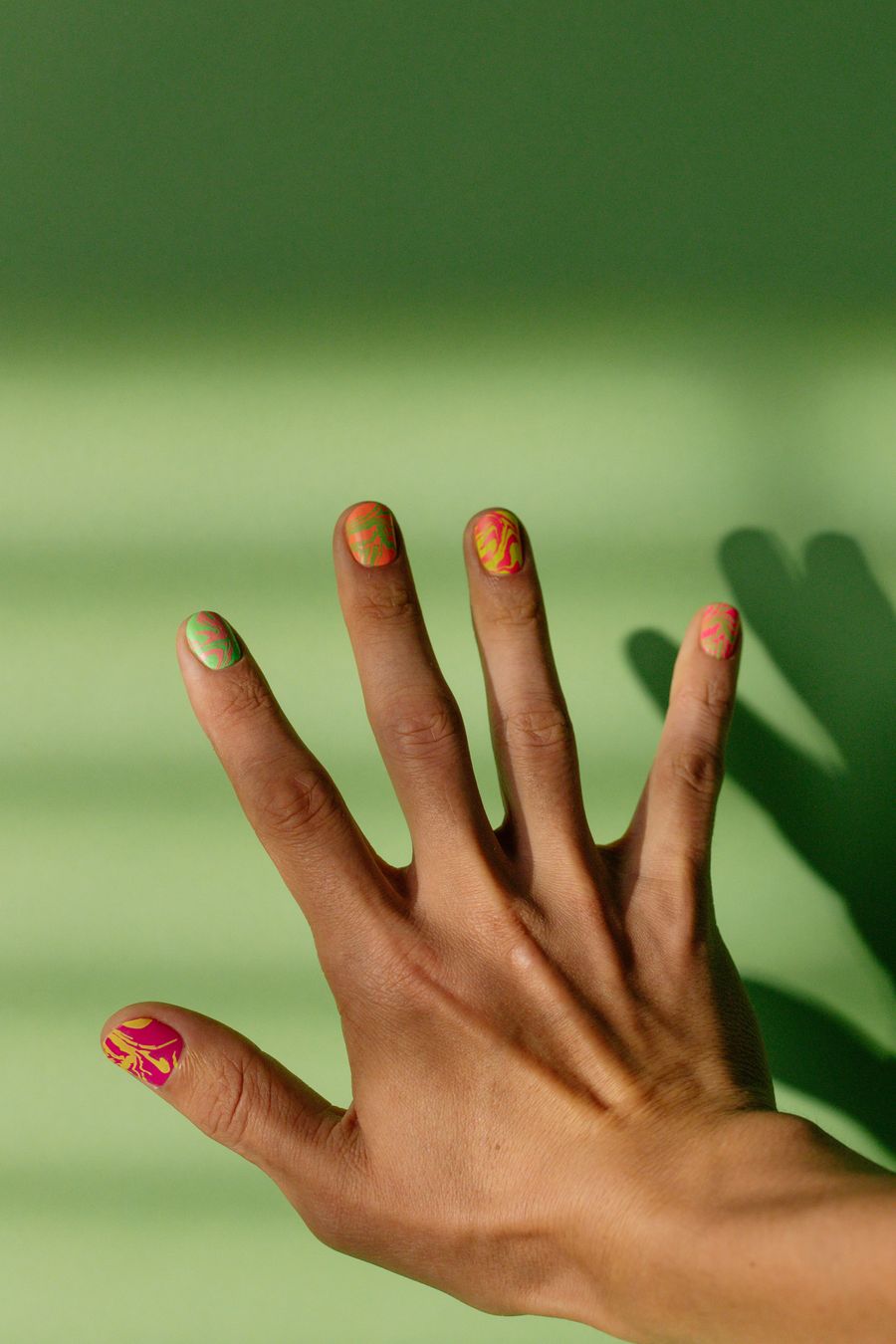
If you have naturally petite nail plates, standard nail art inspiration can feel alienating. You find an intricate checkerboard pattern, a celestial constellation, or a delicate blooming floral set on Pinterest or Instagram, bring it to your appointment (or sit down with your own brushes), and watch it collapse into a cramped, illegible smudge.
The immediate conclusion is often frustrating: My nails are just too small for art.
That conclusion is wrong. Having a smaller canvas does not mean you are relegated to plain sheer pink polish for life. It simply means most mainstream nail art is drafted for long extensions or naturally elongated nail beds. When you understand how proportion, negative space, and visual scale interact on a compact surface, you can adapt many aesthetics you love.
As explored in our comprehensive guide to short nail designs, great styling is never about forcing extra length—it is about honoring the real estate you actually have.
Small Beds vs. Short Nails: Understanding Your Plate Anatomy
The nail community frequently conflates "short nails" with "small nail beds," but they describe two entirely different anatomical realities.
- Short free edges refer to the length of the nail tip extending past where the nail attaches to your finger. Anyone can cut, file, or trim their nails short.
- Small nail beds refer to the physical dimensions of the pink nail plate that adheres to the underlying tissue (the nail bed itself).
If your nail beds are naturally compact, growing the free edge changes the overall silhouette but does not enlarge the attached nail plate.
Furthermore, plate width matters:
- Narrow plates have close lateral nail folds. Thick horizontal striping or bulky side decals crowd the sidewalls almost instantly.
- Wide, compact plates offer lateral width but very little vertical height from the eponychium (cuticle area) to the hyponychium (under-tip seal). Dividing this surface horizontally cuts the visual plane in half.
A manicure can change the appearance of the plate, but it cannot change its underlying dimensions. Avoid cutting or pushing living skin to chase a longer look; work with the visible space instead.
Why Standard Nail Art Fails on Small Plates
Understanding why certain popular designs look cluttered on smaller beds helps you troubleshoot reference photos before you start painting.
1. Oversized Decals and Pre-Fabricated Charms
Some decals and charms are larger than a compact nail plate. Check their size against your nail before applying; if the design reaches the surrounding skin, choose a smaller motif or trim the decal.
2. Multi-Tiered Layouts
Designs with several separate elements—such as a French tip, swirl, and starburst—need room to separate each detail. On a petite plate, these layers bleed together visually, creating visual noise rather than an intentional motif.
3. The Macro Photography Distortion
Close-up nail photography can make tiny details look easier to see than they are at an ordinary viewing distance. Community members in discussions on Reddit's r/RedditLaqueristas regularly point out this discrepancy: designs that look crisp in a zoomed-in macro shot often appear busy and illegible at an arm’s length.
Design Strategies That Actually Work
To create balanced art on a small nail bed, shift your focus from adding elements to scaling them down.
1. The Micro-Motif and Single Focal Point
Instead of repeating a pattern across the entire plate, place a single, scaled-down motif in an off-center quadrant.
- A single micro-heart placed near the lower lateral edge.
- A delicate starburst set near the lunula (the half-moon at the base).
- A single abstract pebble dot on one or two accent fingers.
Confining the motif to an intentional accent leaves the remaining surface uncluttered, allowing the eye to register the art instantly.
2. Negative Space as an Active Design Element
Negative space is the most effective tool for petite nails. When you paint a solid, opaque high-pigment block across a short nail, you clearly define its physical perimeter.
By contrast, using a sheer, milky, or skin-toned translucent base lets the natural plate show through. Abstract negative space swoops, diagonal slice lines, or floating dots draw focus to the movement of the line rather than the perimeter of the bed. For more inspiration on stripped-back aesthetics, explore our guide to minimalist nail designs.
3. Micro French Lines and Verticality
Traditional deep French tips cover one-third to one-half of the nail plate, which cuts a short bed in half.
- The Micro French (Skinny French): Paint an ultra-fine line—scarcely thicker than a needle—directly hugging the free edge contour.
- Side-Angled French: A diagonal micro-line that begins halfway down one sidewall and tapers across the tip creates diagonal movement that works especially well on square and squoval nail shapes.
- Vertical Pinstripes: Fine vertical center lines or offset twin lines draw the gaze along the finger's natural axis.
4. Intentional Color Contrast
On small beds, color pairing dictates clarity:
- High Contrast for Micro-Art: If your motif is tiny, choose a crisp accent color (like deep emerald, espresso, or black over a sheer jelly base) so the detail does not require squinting to see.
- Tonal Shifts for Backgrounds: Keep base coats sheer or close to your skin’s natural undertone to avoid visual harshness where the polish meets the cuticle line.
Navigating the Salon: How to Communicate Scale
Translating your vision to a nail technician requires clear communication about proportions, not just showing a picture. In practical salon scenarios raised in Reddit’s r/Nails community, clients often find that technicians default to standard brush sizes unless asked otherwise.
- Ask for Detail Brushes: Inquire whether the technician has a fine brush suitable for small-scale line work.
- Point Out Scale, Not Just Style: When presenting an inspiration image, explicitly say: "I love this swirl design, but because my nail beds are smaller, could we do one fine line instead of three?"
- Opt for Softened Edges: If your sidewalls allow, a softly rounded tip or gentle squoval contour—as detailed in our almond and oval nail shape guide—creates softer transition lines than harsh geometric corners on petite fingers.
- Refer to Editorial Trends: Mainstream fashion forecasts, including Vogue's short nail design coverage, increasingly showcase understated, clean-lined nail styling on short, natural shapes, giving you relatable references on natural-length nails.
DIY Tips and Digital Preview Limitations
If you prefer doing your own nails at home, small adjustments make intricate work significantly easier:
- Use Shorter Bristles: A shorter detail brush may be easier to control on a small surface. A short, fine-detail brush gives you better control over fluid volume.
- Control Product Bulk: Thick gel layers can round out the nail artificially, creating a bulbous appearance on short plates. Use thin coats and follow the product instructions.
- Dotting Tools Over Brushes: If fine lines feel unsteady, a miniature metal ball stylus (dotting tool) allows you to place precise geometric accents without dragging bristles across cramped space.
Understanding Digital and AI Previews
Virtual try-on tools and AI nail design generators—such as NailMoodLab’s concept generator—are helpful for brainstorming color combinations, exploring themes, and testing whether a micro-French appeals to you before polishing.
However, keep their technical boundaries in mind:
- AI previews are digital concepts; they cannot simulate your natural plate curvature, sidewall depth, or how light reflects off gel layers in real life.
- They provide visual direction rather than a guarantee of salon feasibility or physical fit. Always evaluate whether a digitally rendered motif can realistically be painted onto your physical nail area.
Frequently Asked Questions
Can nail art make my nail beds look physically longer?
Nail art changes appearance rather than the physical dimensions of your nail bed. However, designs featuring vertical striping, micro French tips, and sheer negative space bases create visual lines that guide the eye upward, avoiding the segmented look caused by heavy horizontal color blocking.
Should I completely avoid dark polish colors on small nail beds?
No. While dark colors make the perimeter of the nail obvious, they look sophisticated when paired with intentional negative space, glossy finishes, or micro-accents. You do not have to limit yourself to pale pastels unless that is your personal preference.
What is the biggest mistake to avoid on small nail plates?
The most common mistake is crowding the sidewalls and cuticles with oversized elements. Leaving a tiny margin of breathing room around your art prevents product pooling and gives your manicure a polished, balanced look.