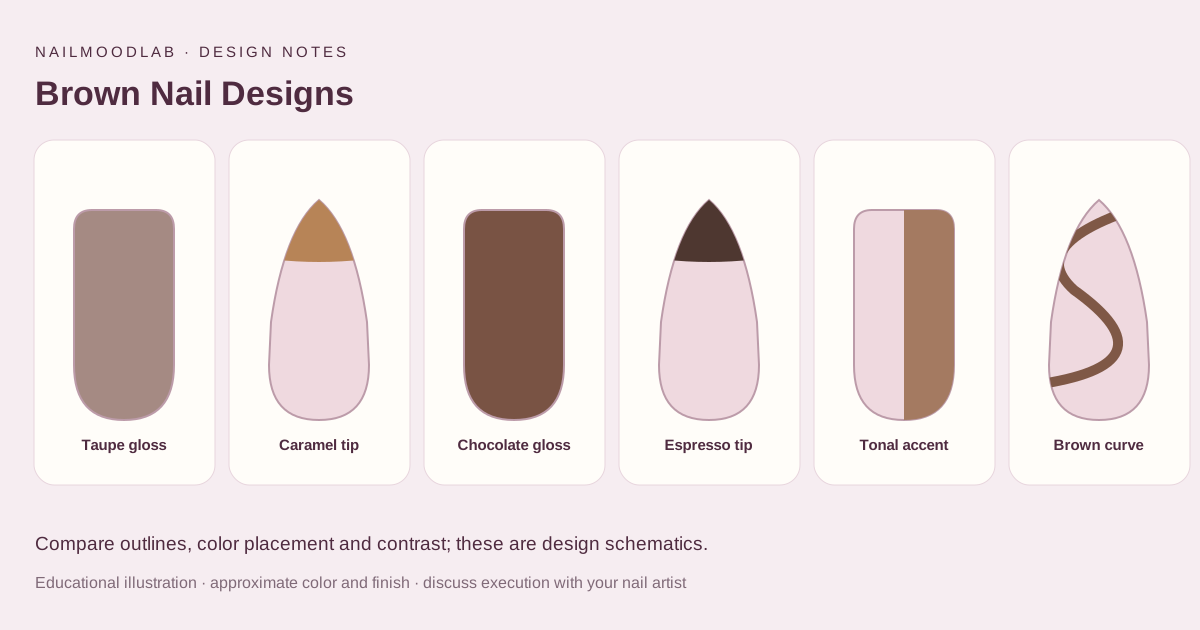
Brown nail designs can be pale and gray-leaning, warm and caramel-colored, or deep enough to look almost black in some lighting. Start with the brown family you actually like, then choose whether it covers the whole nail or appears only in a tip, curve or accent. The word brown alone leaves too much of the design undecided.
Brown-nail inspiration coverage includes lighter shades and art as well as chocolate color. The directions below are original planning combinations, not replicas of those photographs or tested polish swatches.
Choose a color direction before choosing a pattern
| Color description | What to look for in the reference | What to clarify |
|---|---|---|
| Taupe | A muted brown with a gray or mauve-looking cast | How gray you want it to appear |
| Caramel | A lighter, warmer brown direction | Whether the example leans orange or beige |
| Chocolate | A clearly brown middle-to-deep shade | The actual finished swatch, not just the bottle |
| Espresso | A very dark brown direction | Whether you want it to remain visibly brown |
| Tonal set | Several related browns in one manicure | The order and number of colors |
These are visual descriptions, not standardized shade codes. Ask for a finished swatch and compare it in lighting close to where you expect to see your nails most often.
Six brown designs with different amounts of color
1. Taupe gloss on a softly squared outline
Keep the whole set one color and let the outline remain the main detail. This is a useful starting point when you are unsure whether you prefer a gray-brown or a warmer brown. On short nails, a single color avoids trying to fit several small patterns into a limited area.
2. Caramel French tips over a quiet base
Use the warm brown only at the edge. Choose a translucent pink, beige or pale covered base separately. For a short manicure, discuss a narrow border; for a longer one, compare a deeper tip without assuming it should occupy the same amount of space as your reference.
3. Chocolate color with one cream accent
Keep most nails chocolate and use cream on one named accent finger. Repeat a small brown detail on that accent if you want the two colors connected. Decide whether the accent appears on both hands or only one, rather than leaving the ten-nail arrangement unstated.
4. Espresso tips instead of full coverage
A deep brown edge can give you a dark-color reference while leaving much of the base visible. Show a photograph where the shade can still be identified as brown. If the example is nearly black under dim light, tell the artist which appearance is your priority.
5. A tonal brown set
Choose a small group of related browns and assign them to fingers before booking. For example, use taupe, caramel and chocolate with a repeated order on the other hand. Limit additional artwork so the color sequence is easy to read. Our tonal mixed-color planning guide helps organize that sequence.
6. A single brown curve with negative space
Use one curved line over a sheer or pale base, leaving clear space around it. On a short nail, simplify the curve rather than shrinking several overlapping lines. Decide whether the line runs toward the tip or across the nail, and use the same brown elsewhere in the set if you want repetition.
Glossy and matte are separate choices
Compare a shiny-looking surface with a less reflective matte-looking reference at the same color. The surface appearance can change your preference even when the palette is similar.
If you like contrast, propose a glossy-looking tip against a matte-looking background. Ask the artist what can be achieved with the available products and how that finish should be maintained. A design reference does not establish that either finish will last longer or be easier to wear.
Public discussions such as this matte-brown preference thread show that reactions differ. Those opinions are not a rule about which brown or finish you should choose.
Short nails do not require a pale color
If you like a deep brown, compare it on a short reference rather than ruling it out because a gallery mainly shows long nails. Keep the outline and art scale close to your own request.
For small canvases, decide what must remain visible: the color itself, a fine tip or one motif. A large motif and a deep French border may compete for the same space. Ask the artist to adapt one of them instead of trying to reproduce the entire long-nail example.
Brown beyond an autumn theme
You can plan brown nails around a color preference, outfit or recurring personal palette without adding leaves or seasonal motifs. If you want a broader autumn combination with olive, burgundy or cream, the fall nail design guide is the better starting point.
For a patterned brown direction, see tortoiseshell nail ideas. That guide covers a specific layered pattern; a single chocolate color is a different design task.
Our color comparison guide helps describe color preferences without treating a skin-tone label as a universal prescription. Compare the actual swatch and what you like seeing.
Prepare a specific reference
- Pick the brown family and a finished color reference.
- Decide between full color, tips, curves or a tonal set.
- Set your intended length and outline.
- Specify glossy, matte or a deliberate combination.
- Mark the accent finger and confirm the complete quote.
For example: “Short squoval nails in this chocolate brown, glossy finish, with one cream ring-finger accent and a small matching brown curve. I want the brown to remain visible rather than look nearly black.”
NailMoodLab can help make a placement concept. Treat its colors as screen references; it cannot identify an exact polish or predict the finished shade on your nails.
Questions readers ask
Can brown French tips use a pink base?
That is a combination you can propose. Compare the actual pink and brown references together and specify whether the base should be translucent or covered.
How do I avoid a shade I dislike?
Name what you dislike in the example: too orange, too gray, too light or too close to black. Ask to compare finished swatches instead of relying only on names such as chocolate.
Are brown nails only for fall?
No. Seasonal motifs are optional. You can choose the color independently of the time of year.