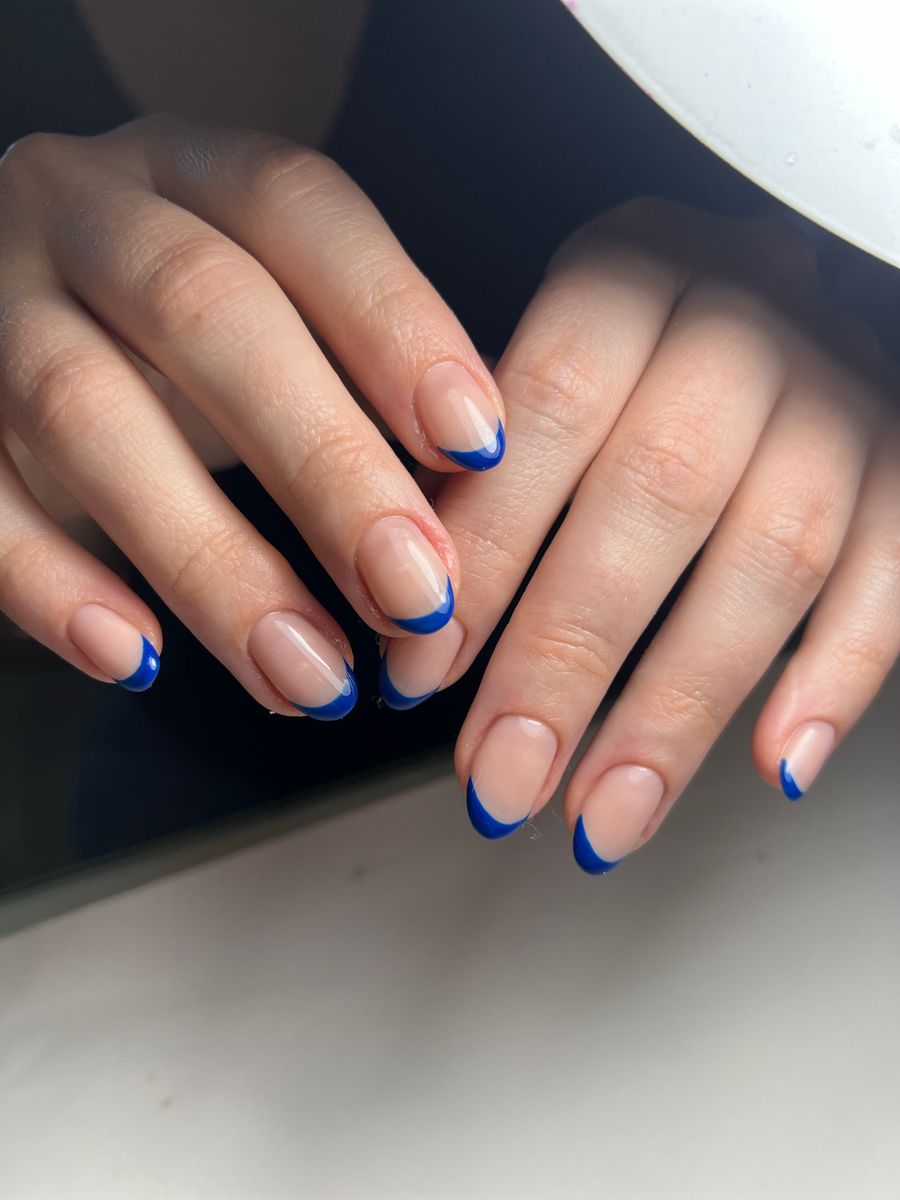
The most useful nail design prompts describe visible choices: shape, length, base color, finish, motif, and where the art appears. Start with those details, then add a short mood description and any important exclusions. After generating, check whether the image actually follows the brief before using it as a salon reference.
For example, “short oval nails, sheer peach base, glossy finish, one small white flower on each ring finger” provides more direction than “beautiful elegant nails.” These nail design prompt examples give you a reusable structure without pretending that a prompt guarantees an exact result.
Use a simple prompt formula
Build the prompt in this order:
Shape and length + base palette + finish + motif and scale + accent placement + mood + essential exclusions.
You do not need every field for every design. A plain-color comparison may need only shape, length, color, and finish. A mismatched set needs more information about how the nails relate to one another.
| Prompt part | Useful description | Less useful description |
|---|---|---|
| Shape and length | Short oval, medium almond | Perfect nails |
| Palette | Sheer warm pink with dark brown accents | Pretty colors |
| Finish | Glossy, soft shimmer, matte appearance | Expensive-looking |
| Motif scale | One small star near the tip | Detailed celestial art |
| Placement | Ring-finger accents, other nails plain | Art everywhere |
| Mood | Quiet and minimal | Trendy and stunning |
Treat mood as a secondary cue. Concrete visual instructions should carry the design, because words such as “elegant” can produce many different interpretations.
Six prompts you can adapt
1. A restrained everyday set
Short rounded nails with a sheer warm pink base and glossy finish. Keep the set simple and consistent, with a tiny cream-colored dot near the base of each ring-finger nail. Quiet, understated mood. No glitter or raised decorations.
This prompt limits the palette and detail so you can judge the overall color and accent placement. If the dots feel too small to matter, ask for one slightly larger accent rather than adding several new motifs.
For more ways to keep a small amount of art intentional, see the minimalist nail-art guide.
2. A clear French-inspired direction
Medium oval nail concept with a translucent neutral base and slim dark-red tips. Keep the tip width visually consistent across the set. Glossy finish, clean edges, no extra patterns or raised pieces.
The key variables are base transparency, tip color, and visual width. Inspect the generated result for tips that change thickness unpredictably or drift outside the nail boundary.
If you prefer a softer look, change the tip color while leaving the rest of the prompt unchanged. That creates a more informative comparison than changing shape and length at the same time.
3. Abstract art with controlled variation
Short squoval nails with a cream base, terracotta curves, and a few dark-brown dots. Use generous open space. Give each nail a slightly different arrangement while repeating the same three colors. Flat art with a glossy finish; no metallic pieces.
This prompt asks for variation within a shared system. Check whether the output repeats the palette and leaves enough open area. If every nail becomes crowded, specify one curve per nail or limit the art to selected accents.
The design should remain understandable at the length you intend to request, not only in an enlarged image.
4. A sparse celestial set
Medium almond nail concept with a deep navy base and small silver-colored star motifs. Place one crescent moon on each ring finger and keep the remaining nails sparse. Glossy finish, flat painted appearance, no large gems.
The prompt distinguishes painted-looking detail from raised decoration. Even so, inspect the result: a bright reflection can still resemble an embellishment, and a generated star may have inconsistent edges.
If the set is too dramatic, retain the accent placement and change the base to a softer shade before altering other variables.
5. A tortoiseshell-inspired accent
Short oval nails with a warm caramel and dark-brown tortoiseshell-inspired pattern on the ring fingers only. Keep the other nails a solid warm brown. Glossy finish, irregular soft-edged patches, no black outlines or raised elements.
This makes the pattern's role explicit. You are asking for a limited accent, not a full patterned set. Review whether the pattern reads as irregular layered color rather than evenly spaced spots.
The image is a reference for an effect; it does not specify the products or technique a salon must use.
6. A calm marble direction
Medium-length softly tapered nail concept with a milky ivory base and sparse gray-brown marble veins. Keep the veins irregular and leave most of each nail open. Use marble on two accent nails per hand, with the others plain ivory. Glossy finish, no gold foil or raised decoration.
This prompt controls density and placement. If the result becomes a dense web, simplify further by asking for one main vein with a few faint branches on each accent.
Inspect the pattern at whole-hand size. A design that looks intricate when enlarged may read as visual noise when reduced.
Use exclusions without creating a second complicated brief
Exclusions describe what you do not want: no raised pieces, no glitter, no text, or no additional colors. Keep them short and tied to actual preferences.
Some tools call separate exclusion instructions a negative prompt. Do not assume a dedicated negative-prompt field exists in every interface. In NailMoodLab, use the available prompt controls and state important exclusions plainly; inspect the output to see whether they were respected.
Avoid long lists of unrelated prohibitions. If the desired design is simple, a clear positive description often communicates more than a paragraph of things to avoid.
Do not use an exclusion as a guarantee. Writing “no distorted fingers” does not prove that the generated hand is accurate. Review anatomy and nail boundaries directly.
Resolve conflicting instructions before generating
Prompts can contain hidden contradictions. “Very short nails with a dense miniature landscape on every nail” asks for limited space and extensive detail at once. “Matte mirror finish” combines visual effects that may not describe a clear target.
Choose the priority. If short length matters most, simplify the art. If the intricate composition matters most, ask the nail professional what adaptation might be possible rather than treating a generated image as evidence that it fits.
Likewise, avoid asking for every mood simultaneously. Minimal, ornate, understated, dramatic, and playful can pull the output in different directions. Pick the dominant visual intention and let the concrete details support it.
Revise one variable after reviewing the result
NailMoodLab supports prompt-based generation and regeneration. It also offers hand-photo shape suggestions and two-image virtual try-on; generated designs can be downloaded, shared, or copied by URL.
Save the first useful result and note what is wrong or missing. Then change the relevant instruction. If the color is too bright, revise the palette. If the art is too dense, reduce motif count or accent coverage.
Keep successful details fixed. Changing the shape, length, finish, and pattern together makes it difficult to tell which revision improved the result.
For a visual comparison on your own hand, use virtual try-on with a clear source photo and the chosen design reference. The preview helps explore appearance; it does not measure your nails or guarantee real-world fit.
Turn the prompt into a salon brief
Select the generated image that best communicates your priorities, then write them in plain language. Identify essential details and acceptable substitutions.
For example: “Keep the warm brown palette and one patterned accent per hand. I am flexible about the exact tortoiseshell patches and prefer a short length.” That gives the professional room to interpret the concept practically.
Use the salon reference-photo guide to prepare the discussion. Ask about feasibility, available finishes, appointment time, and price. A prompt or preview cannot settle those details.
Before sharing, confirm:
- Shape and length are explicit.
- Palette and finish are understandable.
- Motif scale and placement are clear.
- Exclusions reflect actual preferences.
- The result is checked for anatomy and boundary errors.
- Essential details and flexible details are identified.
Try one prompt in NailMoodLab, then make a focused revision based on what you see. If you plan designs regularly, review your current account allowance and available plan information. Consider a future purchase only when checkout becomes available and the offer fits your ongoing use.