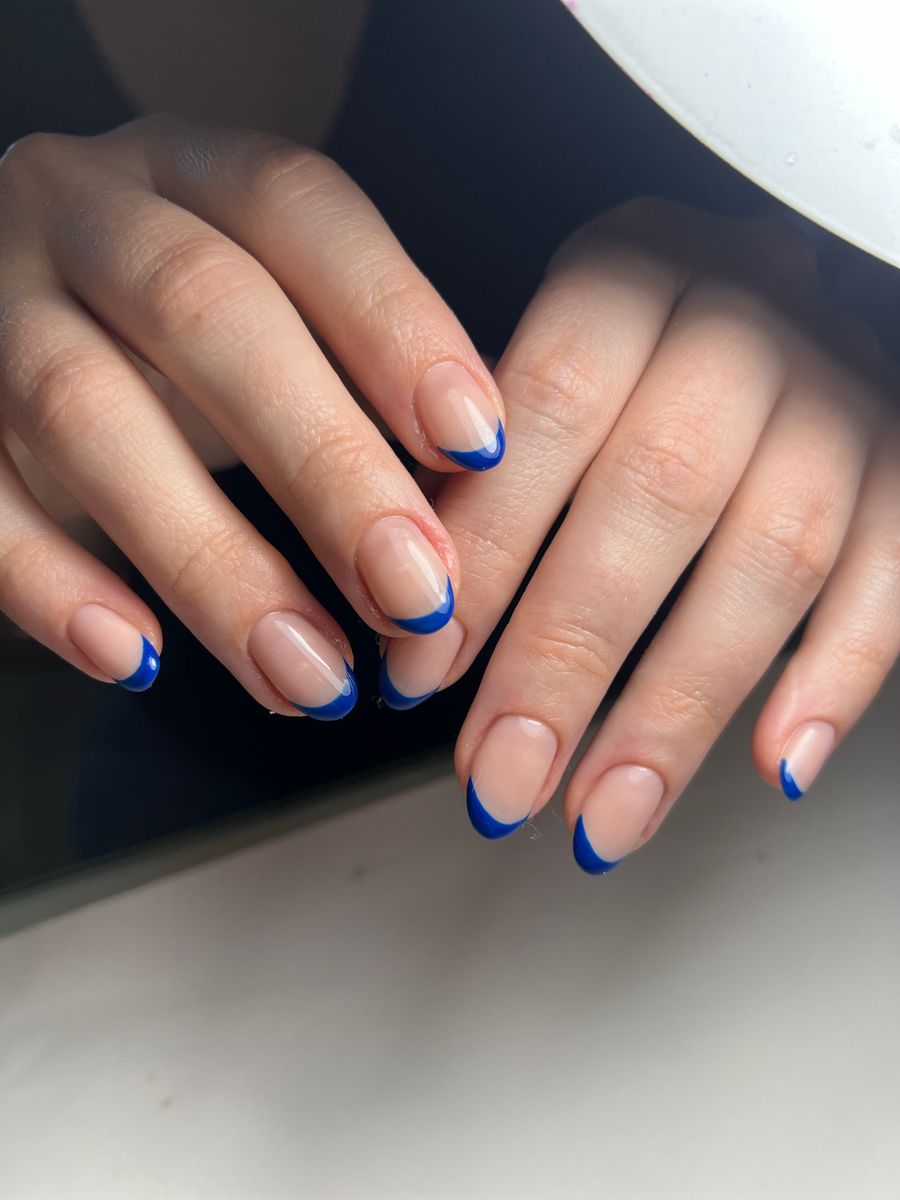
Almond nails taper toward a rounded tip; coffin nails narrow along the sides and finish with a flatter, squared-off end. Choose almond if you prefer a softer endpoint, and explore coffin if the defined flat tip is part of the look you want. Compare them at similar lengths and with the same simple finish before adding art.
The shape name does not determine whether a look is feasible on your current nails or whether extensions are needed. Use the comparison to clarify your visual preference, then ask a nail professional about the appropriate service and practical limits.
Identify the difference that matters to you
The most obvious distinction is the endpoint, but the degree of taper also changes the impression. A strongly tapered coffin reference and a softly tapered one can look quite different even though they share a label.
Point to the parts you like: rounded tip, straighter end, narrower sides, or a less dramatic taper. This gives the professional more useful information than asking for a shape by name alone.
Keep camera angle in mind. A tilted hand can hide the flat end of a coffin nail or make an almond tip appear sharper. Choose references where the outlines are clear.
Do not base the decision on a rule that one shape automatically suits a particular hand. Your preferred appearance and actual routine are more useful starting points than a universal flattering-shape claim.
Compare taper, length, and art space separately
| Feature | Almond | Coffin |
|---|---|---|
| Endpoint | Rounded within the taper | Flatter, squared-off tip |
| Overall impression | Softer curved finish | More defined geometric finish |
| Tip-focused art | Can follow the rounded endpoint | Can emphasize the flat tip and angled sides |
| Pattern planning | Motifs may follow a curved visual flow | Blocks and tip panels can relate to the flat end |
| Consultation question | How soft or narrow should the taper be? | How pronounced should the taper and flat tip be? |
Neither column establishes comfort, durability, or a required construction method. Those depend on the actual service and circumstances and should be discussed with the professional.
The usable design area also depends on width and length. Do not assume every coffin nail has more art space than every almond nail; compare the actual references you are considering.
Choose a realistic length direction
A long coffin set can look more dramatic than a shorter almond set because both the endpoint and length differ. To understand your preference, compare similar visual lengths first.
Use your current nails as a practical reference. If you already know a length you enjoy, explain that to the professional. If you want a significant change, identify the tasks and activities that may influence the decision.
Think about typing, phone use, handling small objects, hobbies, and any applicable workplace requirements. A photograph cannot tell you how a new length will feel in those settings.
If your reference uses much more length than you want, ask how the outline can be adapted. The result may retain the general direction without reproducing the same proportions. A professional assessment is more useful than trying to force an image onto the real nails.
Plan art around the chosen outline
Plain color for the first decision
Start with one color and finish when comparing shapes. A dark glossy coffin set and a pale floral almond set differ too much to isolate the outline.
Once the shape preference is clearer, introduce the palette or art you actually want. This sequence keeps a beautiful pattern from hiding uncertainty about the length or endpoint.
French-inspired tips
Tip art can make the shape difference more visible. Almond follows a rounded taper, while coffin provides a flatter end to emphasize.
Keep the visual tip width comparable when judging references. A broad colored tip can dominate regardless of shape, while a narrow line may create a quieter effect.
Ask the professional how the tip design should change for your chosen proportions rather than copying a reference unchanged.
Geometric and flowing motifs
Coffin references often give you a clear flat boundary to relate to, while almond references can support a softer visual flow. Either can carry abstract art, florals, or plain color when the composition is adapted.
Do not crowd a motif into the narrowest part of the nail simply because the reference places it there. Move, simplify, or reduce the number of elements if that makes the design clearer.
The minimalist nail-art guide offers ways to preserve an idea while using less detail.
Address short nail-bed concerns without making assumptions
If you feel your nail beds are short, explain the look you want rather than assuming a particular shape will create a guaranteed effect. Images can alter proportions through angle, length, and editing.
Ask the professional what outline is practical for the real nails and the service available. The answer may involve adjusting the taper, length, or pattern placement rather than choosing a shape from a chart.
Avoid treating a generated longer-looking nail bed as evidence of a suitable result. Compare the preview with the source photograph to see whether the underlying hand has changed.
A visual preference can still be useful even when the exact reference is not feasible. Identify which feature you want to preserve and keep a less dramatic fallback.
Make a fair virtual comparison
NailMoodLab provides prompt-based generation, hand-photo shape suggestions, and two-image virtual try-on. Generated designs can be regenerated, downloaded, shared, or copied by URL.
Use one clear hand photo for both options. Choose similar color, finish, and intended length so the main difference is the outline.
Try a starting prompt:
Medium almond nail concept with a softly rounded taper, plain warm beige color, glossy finish, no pattern or raised decoration.
For the second reference, change the shape to coffin with a defined flat tip while keeping the other instructions. Inspect whether the generated images actually follow the requested distinction before comparing them.
Use virtual try-on to explore appearance on your photo. Look at the whole hand at a normal size, then check individual nail boundaries and tips for distortions.
The preview is not a measurement, fit guarantee, or proof that the pictured shape can be built on your actual nails. Keep those limits separate from the useful visual comparison.
Confirm the service and upkeep with the salon
Bring the preferred reference and explain what you like about its endpoint and taper. State the length you are willing to wear and the art you want to preserve.
Ask whether the look fits your current nails and booked service, whether a different approach is needed, and how that affects time and price. Do not assume extensions are required or unnecessary based on the shape name.
Discuss maintenance expectations for the actual service. A photo cannot establish that one shape will always be stronger, last longer, or require fewer appointments.
The salon reference-photo guide can help turn the comparison into a clear brief. A useful note might be: “I prefer the flat tip, but I want a gentler taper and a length close to my current set.”
Avoid the common decision traps
Do not compare dramatically different lengths and call the result a shape preference. Do not let a complex finish decide the outline for you. And do not assume a polished AI image is more feasible than a simpler real reference.
If the two options still feel equally appealing, identify the feature you would miss most. Is it the soft endpoint or the crisp flat tip? That question can clarify the decision more than collecting additional unrelated images.
Before choosing, confirm:
- The desired endpoint and taper are described clearly.
- References use comparable lengths and finishes.
- Art placement is adapted to the actual canvas.
- Daily tasks and length preferences are discussed.
- Preview distortions are checked against the source photo.
- Feasibility, maintenance, time, and price are confirmed with the salon.
Explore the two directions with NailMoodLab virtual try-on, then take the preferred features to your nail professional. For regular planning, check your current account allowance and available plan information. Consider a future purchase only when checkout is available and the offer fits your actual use.