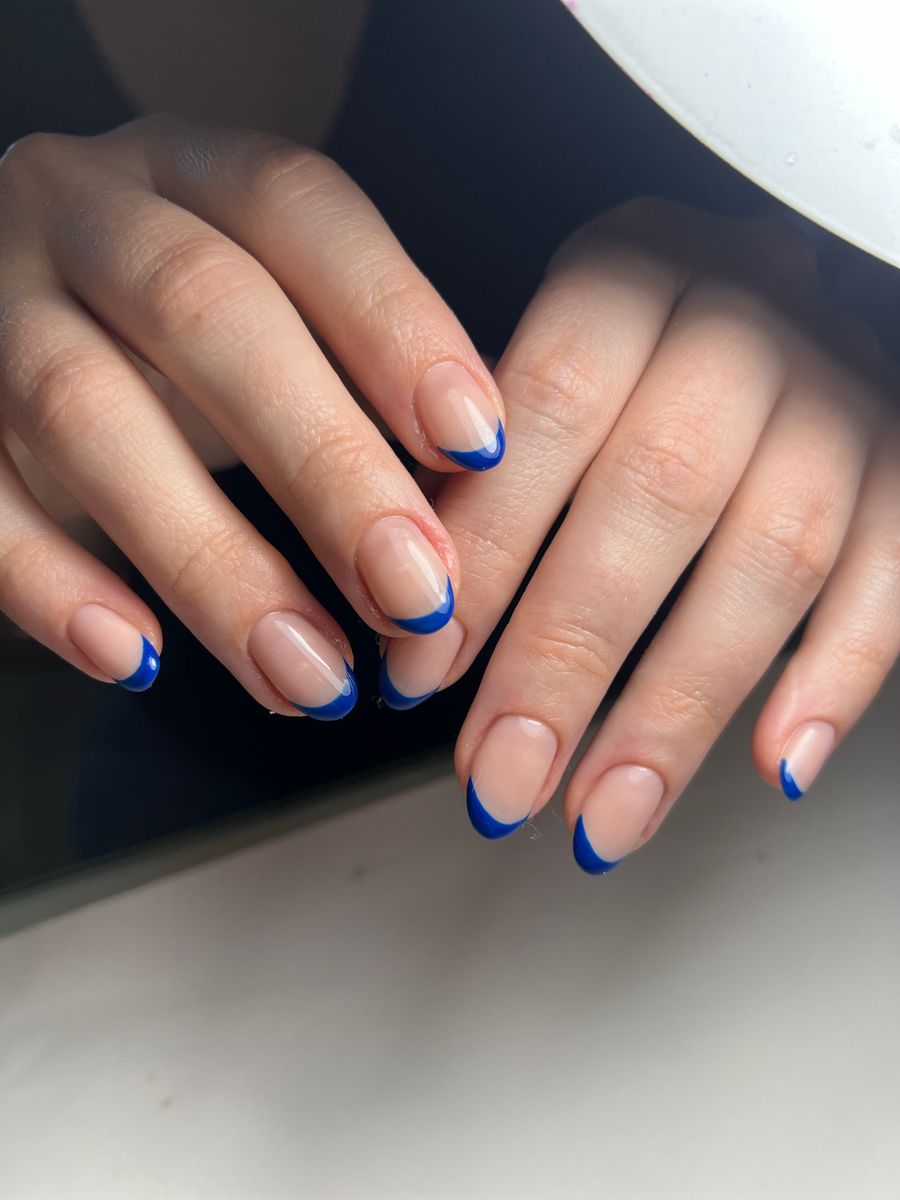
A short oval nail shape offers a clean, continuous perimeter that softens the look of the hands without requiring dramatic length. When you want nail art that works with natural growth rather than fighting it, the goal is to align your design elements with that rounded perimeter.
This guide focuses specifically on how to style short oval nails: which design placements complement a curved free edge, how to avoid visual clutter on smaller surface areas, and how to request the look at a salon. For an overview of how nail length and daily wear factor into design choices across different profiles, see our comprehensive guide to short nail designs.
The Short Oval Shape: Soft Curve vs. Round and Almond
A common challenge when shaping natural nails at shorter lengths is distinguishing between round, oval, and almond silhouettes. Online discussions—such as community troubleshooting threads on nail forums—frequently highlight how people love the tapered elegance of an almond shape, but struggle when their nails are too short to support a true pointed apex without filing into the sensitive sidewalls.
Here is how short oval sits among related shapes:
- Round nails: The sides remain straight and follow the natural contours of the fingertip, rounding off abruptly at the edge. They require zero free-edge overhang to look intentional.
- Short oval nails: The lateral walls gently taper inward as they extend past the nail bed, terminating in a smooth, semicircular curve. You need just enough visible free edge beyond the fingertip to form that soft arch, though no exact millimeter measurement applies across all finger shapes.
- Almond nails: Almond has a narrower, more pointed outline. On very short natural nails there may be too little visible tip to create that shape without filing far into the sides. For a fuller shape comparison, see almond vs. oval nails.
Because an oval tip curves symmetrically across the top, designs that mirror or balance that arch feel cohesive rather than cramped.
6 Design Ideas Tailored for Short Oval Nails
On a compact nail bed, designs should respect the available canvas. Placing heavy artwork or rigid block patterns across a short curved tip can make the plate look disproportionate. The following options work with the natural curve of the nail.
1. The Deep-Curved Micro French
Traditional straight French smile lines can visually flatten an oval free edge. A micro French band that dips deeply along the lateral margins and arches softly over the tip accentuates the oval structure.
Curved micro-tips have gained traction in editorial roundups from publications like InStyle and Byrdie, which frequently showcase thin, high-contrast tip lines on natural nails.
- Best palette: Sheer milky base with a cobalt, sage green, or classic off-white tip.
- Tradeoff: A micro French requires a steady hand and precise smile-line symmetry; slight variations in thickness stand out quickly on a short tip.
2. Sheer Neutral Solids with High-Gloss Topcoat
A sheer wash of nude, pale rose, or translucent milky white is one of the most practical ways to showcase a clean oval contour. Because the polish is semi-translucent, it allows the natural smile line to show through faintly, accentuating the intentional shape of the free edge.
- Best palette: Rose-water jelly, warm beige, or semi-opaque linen.
- Tradeoff: Sheer finishes highlight underlying nail discoloration, ridges, or irregular nail bed margins.
3. Diagonal Negative-Space Accents
Rather than dividing a short nail horizontally, a diagonal stroke creates directional interest across the curved edge. A gentle diagonal line or color-block corner sweeping from the side wall to the opposite tip edge elongates the visual flow of the nail plate. For more stripped-back approaches to negative space, explore our guide to minimalist nail designs.
- Best palette: Clear negative-space base with muted terracotta, deep plum, or warm charcoal accents.
- Tradeoff: If the diagonal band is drawn too wide, it cuts across the apex awkwardly, making the oval curve appear lopsided.
4. Petite Botanical and Micro-Dot Accents
Adding hand-painted details to a short oval works best when artwork is grouped near the cuticle or placed off-center along the outer curve. Tiny daisy clusters, micro-dots, or a single sprig motif leave plenty of open space, keeping the small nail plate uncluttered.
- Best palette: Soft taupe or blush base with miniature white and pale gold details.
- Tradeoff: Tiny hand-painted designs can be time-intensive to apply and may lose definition if topcoat is applied too thickly.
5. Tonal Ombré (Melted Gradient)
A soft horizontal fade from a neutral cuticle base to a slightly lighter or pastel tip creates a smooth transition. Unlike high-contrast color blocking, a diffused ombré mirrors the natural transition of a nail plate to its free edge, making the oval contour feel seamless.
- Best palette: Nude-to-cream, soft peach-to-ivory, or lavender-to-sheer-pink.
- Tradeoff: Blending gradients on very short lengths requires sponge-stippling or an airbrush; traditional brush blending can look streaky on a compact surface.
6. The Single Centered Vertical Line
A solitary fine line running straight down the vertical axis of the nail provides a minimalist, contemporary graphic. Because it leads the eye straight from the cuticle to the crest of the oval curve, it offers balanced geometry suitable for professional settings. See our curated looks for office-appropriate nail designs for similar low-profile styling ideas.
- Best palette: Semi-matte nude base with a black, metallic copper, or chocolate-brown hairline stripe.
- Tradeoff: Any slight deviation off-center is immediately apparent, making precision critical during application.
When to Choose a Simple Round Tip Instead
While short oval is versatile, it may not suit every natural nail outline for every routine. You may prefer a classic round shape if:
- Nails are worn flush to the fingertip: If there is no free edge past the hyponychium, attempting an oval taper can force you to file into the lateral nail folds, which can irritate the skin.
- You have high-contact daily tasks: Typing heavily, working in manual trades, or handling frequent dishwashing can put lateral stress on tapered sidewalls. A round outline may feel easier to maintain at a very short length.
Salon Communication and Visual Previews
Achieving a clean short oval in a salon setting comes down to clear phrasing:
- What to say: "I’d like a soft oval on my natural length. Please keep the sidewalls smooth with a gentle taper, but round out the tip so it doesn't form a point or turn into an almond."
- What to watch for: Ensure the technician does not file too far down the sides of the nail, which narrows the structural foundation of the stress zone.
If you are brainstorming color combinations or layout ideas before your appointment, you can experiment using the NailMoodLab AI nail design generator. Keep in mind that digital previews are generative design concepts intended for creative inspiration; they do not account for individual nail plate thickness, specific salon polish formulations, skin undertones, or mechanical wear under real-world conditions.
Common Mistakes with Short Oval Designs
- Using broad horizontal stripes: Thick horizontal lines visually divide the nail and interrupt the smooth curve of the free edge.
- Filing sides into a point: Over-tapering short natural nails in an attempt to mimic an almond look can narrow the sides and often results in an uneven triangle.
- Flooding the lateral sidewalls with art: Packing decorative elements right up to the nail margins can make short nails appear wider and crowd the curve.
Frequently Asked Questions
Can I get a short oval shape if my nails are currently clipped short?
You can start establishing the curve as soon as the nail grows just slightly past the edge of your fingertip. Until that visible free edge appears, maintain a gentle round shape to allow the sidewalls to grow out evenly.
Does a short oval shape suit wide nail beds?
Yes. The gentle inward taper of an oval shape naturally balances wider beds by softening the corner transitions, especially when paired with vertical accents or sheer-toned bases.